Bereavement Counselling After Losing a Parent
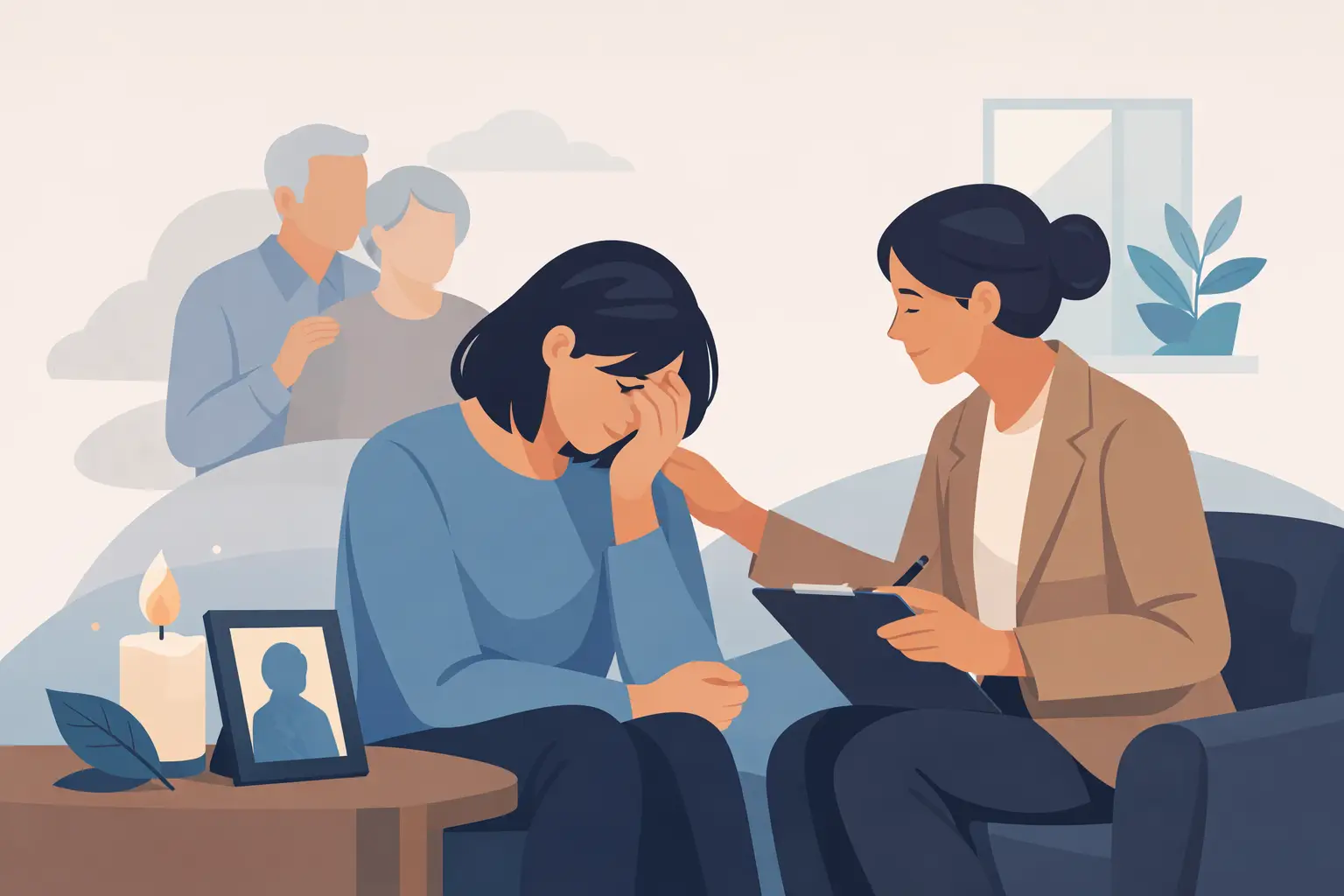
A parent’s death can change the shape of everyday life in ways other people may not see. You may be managing practical responsibilities, supporting family members, returning to work, or simply trying to get through the day while feeling that something fundamental has shifted. Bereavement counselling after losing a parent can offer a private, steady space to speak honestly about what has happened and how it is affecting you.
There is no correct way to grieve. You may feel devastated, numb, angry, relieved, guilty, frightened, disconnected, or several of these things at once. Even where a death was expected, the reality of living without a parent can be profoundly difficult. You do not have to face those feelings alone or explain them away.
Why losing a parent can feel so destabilising
For many adults, a parent remains an important emotional reference point, regardless of age or the complexity of the relationship. They may have been the person you called for advice, the keeper of family stories, a source of practical help, or someone whose approval still mattered deeply. Their death can bring a sense of losing part of your history as well as a person you loved.
Grief may also bring earlier experiences to the surface. You might find yourself thinking about childhood, unresolved disagreements, times you felt close, or times you did not. If the relationship was difficult, estranged, critical, or unpredictable, bereavement can be especially complicated. Alongside sadness, there may be anger, regret, relief, or questions that can no longer be answered. These responses do not mean you loved your parent any less. They reflect the full reality of the relationship you had.
Sometimes the loss arrives at a period when you already have a great deal to carry. Caring for children, supporting a surviving parent, navigating menopause, managing work or coping with your own health concerns can leave little room to grieve. Feelings may emerge later, perhaps after the funeral, on an anniversary, or during an ordinary moment that makes the absence suddenly clear.
What bereavement counselling after losing a parent can offer
Counselling is not about rushing you towards acceptance or asking you to “move on”. It is about making room for your individual experience of loss, with care and without judgement. Some people need to talk in detail about the death. Others need somewhere to express emotions they have kept hidden to protect those around them. Both are valid starting points.
In therapy, you may begin to understand why certain moments feel particularly painful and identify what helps you feel more supported when grief becomes overwhelming. This might include finding ways to manage anxiety, sleep difficulties, low mood, irritability or the loss of confidence that can follow a major bereavement.
The work can also help you hold onto the relationship in a way that feels meaningful. Continuing bonds can take many forms: remembering a parent’s values, revisiting stories, acknowledging what they gave you, or making sense of what was missing. Healing does not require forgetting. Often, it involves finding a way to carry the relationship and the loss with less isolation and distress.
There is no timetable for grief
Some people seek support within weeks of a parent’s death. Others do so months or years later, when they realise they are still struggling or when a new life event brings the loss into sharper focus. A birthday, becoming a parent yourself, moving house, retirement, or another family death can all reopen grief.
It may help to seek counselling if you feel persistently stuck, unable to function as you normally would, overwhelmed by guilt or anger, or increasingly isolated from the people around you. You may also want support simply because you would value a confidential space that is entirely yours. You do not need to reach a crisis point before asking for help.
A therapeutic approach shaped around you
Bereavement is personal, so support needs to be personal too. A therapist will not assume that your loss is the same as anyone else’s, or that a particular outcome should be your goal. The therapeutic relationship itself matters: you need to feel heard, respected and safe enough to say what is difficult to say elsewhere.
A trauma-informed approach is particularly important where a death was sudden, distressing, medically traumatic, or followed a long period of caring. If intrusive images, panic, emotional numbness or a strong sense of unreality are part of your experience, therapy can proceed gently. The focus is on building safety and stability, rather than pushing you to revisit painful memories before you feel ready.
Attachment theory can also offer a compassionate way to understand grief. Our early relationships can shape how we seek closeness, respond to separation and cope when we need support. Exploring these patterns is not about blaming your upbringing. It can help make sense of why this particular loss feels so consuming, or why asking for comfort feels difficult.
Relational psychotherapy and Transactional Analysis may help you notice long-standing roles within your family. Perhaps you became the responsible one, the peacekeeper, the strong one, or the person expected not to need anything. After a parent dies, those roles can become more intense. Therapy can create space to understand them and to respond to yourself with greater compassion.
When family grief makes things harder
A parent’s death can change family relationships quickly. Siblings may grieve differently, disagree about practical decisions, or fall into familiar tensions. One person may want to talk constantly while another withdraws. A surviving parent may need support at the very point you have least capacity to give it.
There is rarely a simple answer to these situations. You may need clearer boundaries, more honest conversations, or permission to step back from responsibilities that are too much. Counselling can help you think through these choices without being told what you should do. The aim is to help you act in a way that is both caring and sustainable.
It can also be difficult when others expect grief to have a neat ending. Comments such as “you seem better now” may leave you feeling unseen, especially if you are working hard simply to cope. Grief often changes over time rather than disappearing. With support, many people find that the intensity softens and that memories can become less painful to hold, but this does not happen in a straight line.
What to expect from counselling
Your first conversation should feel low-pressure. It is an opportunity to discuss what has brought you to therapy, ask questions and consider whether the support feels right for you. You do not have to tell your whole story immediately.
Ongoing sessions are usually a regular 50-minute time set aside for you. Some people prefer weekly sessions during an acute period of grief, while fortnightly sessions may suit others. The right pace depends on your needs, your circumstances and how much support you have outside therapy.
Confidentiality and clear boundaries are central to the work. Knowing that you have a consistent, private place to bring your thoughts can be a relief when you feel you must stay composed elsewhere. Sessions can take place in person in Stockport or securely online across the UK, allowing support to fit around work, caring commitments or distance.
A gentler way forward
Losing a parent may always remain significant. Counselling cannot remove that love or make the loss unimportant, nor should it try to. What it can offer is companionship, understanding and practical emotional support as you learn to live with a changed reality.
Whether your grief is recent, delayed or tangled up with a complicated relationship, you deserve to feel heard, valued and understood. Taking time to speak with a compassionate professional can be a quiet but meaningful step towards feeling less alone.