
How to Build Self Compassion When Life Feels Hard
That moment after you make a mistake can be revealing. Perhaps you replay a conversation all evening, call yourself foolish, or feel that one difficult day proves you are failing. You may be kind, patient and understanding with people you love, yet find it almost impossible to offer yourself the same response. Learning how to build self compassion is not about excusing everything or pretending that life is easy. It is about meeting your struggles with the care and steadiness you deserve.
For many people, self-criticism began as a way of coping. It may have helped you try harder, avoid rejection or stay alert to other people’s needs. But when that inner voice becomes harsh and constant, it can deepen anxiety, low mood, shame and exhaustion. A more compassionate relationship with yourself can create room to reflect, recover and make changes without being driven by fear.
What self compassion really means
Self compassion is the practice of responding to your own pain, imperfection or disappointment with kindness, honesty and understanding. It does not mean lowering your standards, becoming self-absorbed or avoiding responsibility. In fact, people are often better able to acknowledge their part in a problem when they do not feel crushed by shame.
There are three helpful elements to it. First, noticing that you are having a difficult time rather than pushing the feeling away. Second, remembering that struggle is part of being human, not proof that you are uniquely broken. Third, choosing a supportive response, even if it feels unfamiliar at first.
This can be especially difficult if you grew up feeling that affection had to be earned, that emotions were unwelcome, or that mistakes led to criticism. In those circumstances, harsh self-talk may feel normal or even necessary. It is not a personal failure if compassion feels awkward. It is a sign that you may be learning a new emotional language.
Why being hard on yourself can feel safer
A critical inner voice often promises protection. It may say, “If I judge myself first, nobody else can hurt me,” or, “If I keep pushing, I will not let anyone down.” The problem is that criticism rarely creates lasting confidence. It can keep you tense, avoidant and fearful of getting things wrong.
At times of change, this voice can become louder. Menopause, bereavement, relationship strain, caring responsibilities, illness or work pressure can all affect how secure and capable you feel. When your usual ways of coping are stretched, you may blame yourself for having needs at all.
Self compassion offers another route. Rather than asking, “What is wrong with me?”, you might begin to ask, “What has been difficult here, and what do I need?” This does not remove the problem. It changes the conditions in which you face it.
How to build self compassion in everyday moments
The most useful practice is usually small enough to use when life is already demanding. You do not need to feel warm towards yourself immediately. Start by becoming less hostile.
Notice the words you use with yourself
Pay attention to the tone of your inner voice, particularly after a setback. You may hear phrases such as “I always ruin things”, “I should be coping better”, or “I am too much”. Try writing down one recurring thought exactly as it appears.
Then consider how you would speak to a friend in the same position. You would probably be more balanced: “You were under pressure”, “Anyone might find this difficult”, or “You can take one step at a time.” The aim is not to replace every negative thought with forced positivity. It is to introduce a voice that is fairer, more accurate and less punishing.
Name what is happening without judgement
When emotions are intense, simple naming can help you slow down. You might quietly say: “This is anxiety.” “I feel rejected.” “I am overwhelmed right now.” Naming an experience gives it some shape and can reduce the urge to react immediately.
Add a compassionate acknowledgement: “It makes sense that this feels painful.” This is different from deciding that every fear is true. You are recognising your emotional reality before deciding what to do next.
Offer yourself practical care
Compassion is not only a feeling. It can be an action. Sometimes the kindest response is drinking some water, eating a proper meal, stepping outside for ten minutes, turning down an unnecessary commitment or asking someone you trust for support.
The right action depends on the situation. If you are avoiding an important task because you feel ashamed, self compassion may involve breaking it into a manageable first step. If you have been pushing through exhaustion, it may mean resting without having to earn it. Kindness and accountability can sit alongside each other.
Use touch or breath to settle your body
Self-criticism is often physical as well as mental. You may notice a tight chest, clenched jaw, shallow breathing or a restless urge to fix everything at once. Placing a hand on your chest or arm, if that feels comfortable, and taking a slower breath can signal safety to your nervous system.
You might say, “I am here with myself.” For people with trauma histories, body-based practices can sometimes feel uncomfortable or activating. If that is your experience, keep the practice brief, choose something less direct such as feeling your feet on the floor, or explore it with a therapist who can help you work at a safe pace.
Let imperfection be human
Perfectionism often makes self compassion feel conditional: you can be kind to yourself only once you have done everything correctly. But no one can meet that standard for long. A missed deadline, an untidy house, an emotional reaction or a difficult conversation does not define your worth.
Try finishing the sentence, “This is hard because…” rather than, “This is hard because I am inadequate.” The first invites curiosity. The second closes the door on it. Curiosity helps you see the context: lack of sleep, grief, fear, past experiences, unrealistic expectations or simply too much to carry.
Building compassion after a mistake
When you have hurt someone, made a poor decision or behaved in a way you regret, self compassion can be misunderstood as letting yourself off the hook. It is not. A compassionate response makes it easier to face what happened clearly.
Begin with honesty: what did you do, and what impact may it have had? Then separate your behaviour from your identity. “I handled that badly” leaves room for repair. “I am a terrible person” tends to lead to collapse, defensiveness or withdrawal.
Where possible, take a meaningful next step. You may need to apologise, make amends, have a difficult conversation or learn a different way of responding. Afterwards, allow yourself to be a person who is still learning. Shame says you must be punished to prove you care. Compassion helps you care enough to do better.
When self compassion feels out of reach
There are times when a kind phrase or breathing exercise is not enough. If you have lived with persistent criticism, emotional neglect, trauma or controlling relationships, being gentle with yourself may bring up grief, mistrust or a sense of vulnerability. You may understand the idea intellectually while feeling unable to believe it.
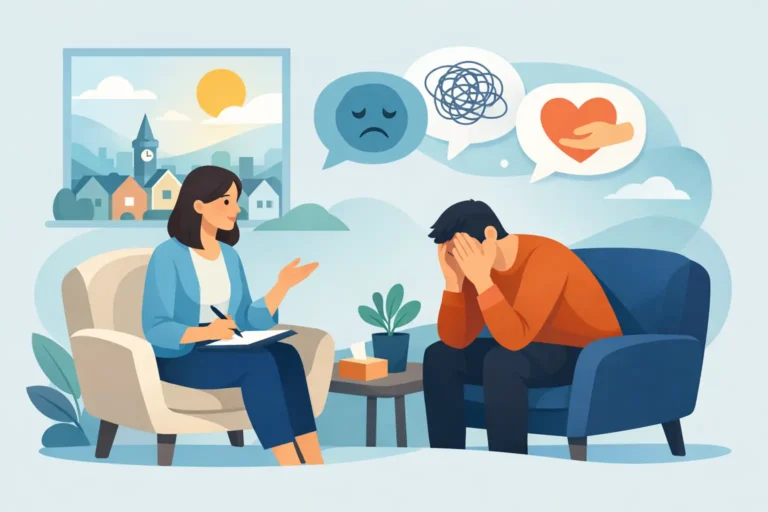
This is where therapy can offer a different experience. In a confidential, collaborative relationship, you can explore where your self-critical patterns began and what keeps them in place now. Approaches informed by attachment theory, Transactional Analysis and trauma-informed practice can help make sense of protective patterns without judging them.
Therapy is not about being told to think positively. It is a space to feel heard and understood while developing practical ways to regulate difficult emotions, strengthen boundaries and relate to yourself with greater confidence. The pace should be shaped around your needs, particularly when painful experiences are involved.
A gentler question to carry with you
You do not have to become endlessly cheerful or confident to practise self compassion. On difficult days, it may be enough to pause before the familiar self-attack and ask, “What would support me right now?” The answer may be small, imperfect and quietly practical. Repeated over time, those moments can become the beginnings of a safer, kinder relationship with yourself.