
How to Regulate Intense Emotions with Care
A strong emotional reaction can arrive before you have found words for it. Your chest may tighten during a difficult conversation, tears may come without warning, or anger may feel so immediate that you want to act before thinking. Learning how to regulate intense emotions is not about becoming detached or pretending that difficult feelings do not matter. It is about creating enough safety and space to respond to what you feel, rather than being carried away by it.
Intense emotions are often understandable responses to pressure, loss, conflict, uncertainty or old hurts being touched in the present. They can also feel frightening, particularly if you have spent years holding everything in or managing alone. You deserve support that takes your feelings seriously without allowing them to define every moment.
Why emotions can feel too big
Emotions are not simply thoughts that can be reasoned away. They involve the body, nervous system, memories and relationships. When your system senses danger, whether the danger is current or resembles something painful from the past, it may move quickly into fight, flight, freeze or shutdown.
This can look different from person to person. You may become tearful, restless, numb, irritable, panicked or desperate for reassurance. You may withdraw from people you care about, send a message you later regret, or feel unable to make even a small decision. Hormonal changes, poor sleep, grief, menopause, work strain and ongoing relationship difficulties can all reduce the emotional capacity you usually have available.
The feeling itself is not evidence that you are failing. It is information. The challenge is to listen to that information while also caring for yourself in the immediate moment.
How to regulate intense emotions in the moment
When you are overwhelmed, aim first for steadiness, not insight. Trying to solve a complex relationship issue or make a major decision while your body is on high alert rarely brings the clarity you want. Begin by helping your nervous system recognise that this moment can be survived.
Pause before you act
If possible, give yourself a brief pause between feeling and action. You might say, “I need ten minutes before I can talk about this properly,” step into another room, or put your phone down before replying. A pause is not avoidance when you plan to return to the issue. It is a boundary that protects you and the conversation.
If leaving is not possible, bring attention to something concrete. Feel both feet against the floor, notice the support of the chair, or name five neutral things you can see around you. This simple grounding helps shift attention from the internal alarm towards the present environment.
Slow the body down
The body often needs reassurance before the mind can settle. Try breathing out a little longer than you breathe in, without forcing deep breaths. For example, breathe in gently for a count of three and out for a count of five, repeating this for a minute or two.
You could also hold a warm drink, wash your hands in cool water, wrap yourself in a blanket, or take a short walk at a pace that feels manageable. These are not cures for distress. They are ways of sending your body a message: I am here, I am paying attention, and I do not have to make this worse.
Put respectful words around the feeling
Naming an emotion can reduce some of its force. Instead of saying, “I am a mess,” try, “I am feeling frightened and ashamed,” or, “I am very angry because I feel dismissed.” Be as specific as you can, while remembering that several feelings can exist together.
It can help to distinguish the feeling from the story that accompanies it. “I feel unwanted” is a real and painful experience. “Nobody will ever care about me” is a conclusion your distressed mind may be drawing. Both deserve compassion, but they need different responses.
Ask what you need for the next hour
You do not need to solve your whole life while upset. Ask a smaller question: what would help me get through the next hour safely and kindly? The answer may be food, rest, quiet, a shower, a walk, a cry, or speaking to someone who can listen without immediately trying to fix things.
There is a trade-off here. Distraction can be useful when feelings are at a level that makes reflection impossible, but constant distraction can leave the underlying issue untouched. Once the intensity has eased, return gently to what the emotion may be asking you to notice.
Build emotional regulation before the crisis point
Emotional regulation is easier when it is not only used in an emergency. Small, repeated practices gradually increase your ability to stay connected to yourself during difficult moments.
Notice your early warning signs. Perhaps you start speaking quickly, become unusually quiet, lose your appetite, scroll late into the night, or feel a familiar tightness in your throat. These signals are personal. Keeping a brief note of what happened before an emotional surge can reveal patterns over time, including particular situations, people or expectations that leave you depleted.
It is also worth looking honestly at the foundations of your wellbeing. Sleep, regular meals, movement, time outdoors and moments of genuine rest will not remove grief, trauma or relationship pain. They do, however, influence how much capacity your nervous system has on a difficult day. This is not about perfect routines. It is about offering yourself reliable care where you can.
Supportive relationships matter too. Choose carefully who you turn to. Some people can sit with your feelings and help you feel less alone; others may minimise, criticise or make you feel responsible for their reaction. Learning to ask for what you need can be powerful: “Could you listen for ten minutes without offering advice?” or “I need some reassurance, not a solution right now.”
Be curious about the pattern, not critical of yourself
Many intense reactions have a history. A disagreement with a partner may feel unbearable because it touches an earlier experience of rejection. A colleague’s tone may trigger anxiety because criticism was once linked with shame or unpredictability. Understanding this does not mean blaming the past for everything. It gives you more choice in the present.
Attachment patterns can shape what feels safe in close relationships. Some people cope by becoming highly self-reliant and withdrawing; others feel compelled to seek immediate closeness or reassurance. Neither response makes you difficult or broken. They may have developed as intelligent ways of coping at an earlier time.
A compassionate question is often more helpful than self-criticism: “What has this feeling reminded me of?” You may not know the answer straight away. The aim is not to analyse every emotion, but to become less afraid of your own inner experience.
When intense emotions need professional support
Self-regulation skills are valuable, but they are not meant to carry every burden. It may be time to speak with a therapist if emotions regularly feel unmanageable, affect sleep or work, lead to conflict or isolation, or leave you feeling numb, hopeless or unlike yourself.
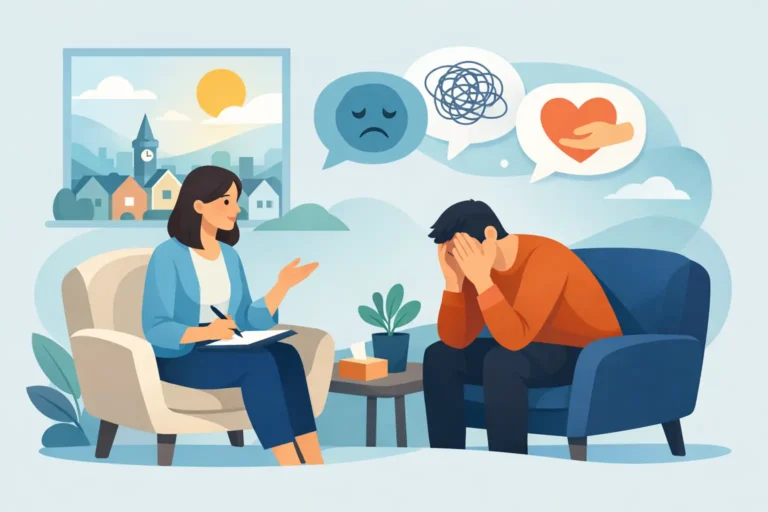
Therapy can offer a confidential, consistent space to understand what sits beneath recurring emotional overwhelm. A trauma-informed approach goes at a pace that respects your safety. Relational psychotherapy, attachment theory and Transactional Analysis can help make sense of long-standing patterns in how you relate to yourself and others, while building practical ways to respond differently.
At Sue Moir Psychotherapy, adults can explore these experiences through individual sessions in Stockport or secure online therapy across the UK. The work is collaborative and personal. You do not need to arrive with the right language, a clear diagnosis or a plan for what to say. Beginning with what feels most pressing is enough.
If you are at immediate risk of harming yourself or someone else, or feel unable to stay safe, contact emergency services on 999 or seek urgent support through NHS 111. In a crisis, immediate safety comes first.
Let regulation mean kindness, not control
There will be days when the tools work quickly and days when they do not. Progress is not never feeling anger, sadness, fear or grief again. It is noticing the feeling sooner, treating yourself with more care, and having more options than reacting automatically.
You do not have to face intense emotions alone. With patient support and a safe place to be understood, feelings that once seemed overwhelming can become more manageable, meaningful and less isolating.