A Practical Guide to Menopause Mood Changes
Some people describe menopause as feeling unlike themselves overnight. A small disagreement feels unbearable, tears arrive without warning, or a familiar sense of competence is replaced by worry, anger or flatness. This guide to menopause mood changes offers a compassionate way to make sense of those experiences without dismissing them as “just hormones”.
Mood changes during perimenopause and menopause can be disruptive, but they are also understandable. They often arise at a point in life when the body is changing alongside work pressures, caring responsibilities, relationship shifts, loss, changing identity and concerns about ageing. You deserve support that takes the whole picture seriously.
Why menopause can affect your mood
Perimenopause is the stage before periods have stopped for 12 months. During this time, fluctuating oestrogen can affect the systems involved in mood, sleep and stress. For some women, emotional changes are one of the first signs, even before periods become noticeably irregular.
There is no single menopause experience. One person may feel more anxious and restless, while another notices low mood, irritability or a shorter temper. Some feel emotionally numb or disconnected from the people and activities they usually value. Symptoms may come and go, which can make them especially unsettling: a good week can be followed by a difficult one with little obvious explanation.
Sleep deserves particular attention. Night sweats, insomnia or waking early can leave the nervous system more sensitive to stress. When you have been exhausted for weeks, it is harder to regulate strong feelings, think clearly or find patience with yourself and others. This is not a personal failing. It is a sign that you may need care, rest and practical support.
Past experience matters too. A history of depression, anxiety, trauma, premenstrual difficulties or postnatal depression can sometimes make this transition feel more intense. Equally, menopause can bring old feelings to the surface because it touches questions of identity, sexuality, fertility, independence and how you see your future.
Common menopause mood changes
Anxiety can show up as racing thoughts, a sense of dread, physical tension, panic or repeatedly imagining the worst outcome. You may also become less confident in situations you once managed easily, such as meetings, social occasions or travelling alone.
Low mood may feel like persistent sadness, a loss of pleasure, hopelessness, tearfulness or withdrawing from others. Irritability and anger are common too. Anger can be particularly difficult when it feels out of character, and many women carry shame about it afterwards. Yet anger often signals that you are overwhelmed, depleted or carrying more than is sustainable.
Brain fog can add another layer. Forgetting words, losing your train of thought or struggling to concentrate may prompt worries that something is seriously wrong. Although these experiences can be associated with menopause, they should not simply be ignored. A GP can help consider other possible causes, including thyroid problems, iron deficiency, medication effects, anxiety or depression.
A guide to menopause mood changes: noticing your patterns
You do not need to monitor every feeling closely, but a gentle record for a few weeks can reveal useful patterns. Note changes in mood, sleep, periods, hot flushes, alcohol, caffeine, stressful events and anything that brings relief. The aim is not to judge yourself or find a perfect solution. It is to build a clearer picture that you can use in conversations with a GP, partner or therapist.
It can also help to ask a kinder question than, “What is wrong with me?” Try, “What has been difficult for me lately, and what might I need?” Sometimes the answer is straightforward: more sleep, fewer commitments, medical advice or a conversation that has been avoided. At other times, the answer takes longer to understand.
Be careful of making major conclusions about your life at the height of an exhausted or highly anxious day. Menopause can magnify existing strains, but it does not automatically mean every relationship, job or decision is wrong. Giving yourself space to reflect can make a real difference.
Support your body without putting all the responsibility on yourself
Small routines can steady mood, particularly when symptoms feel unpredictable. Regular meals can reduce the shakiness and irritability that come with long gaps between eating. Gentle movement, whether walking, swimming, stretching or something more energetic, can support sleep and reduce stress for many people. Consistent waking times and a calmer evening routine may be more realistic than trying to achieve perfect sleep.
Alcohol can temporarily take the edge off difficult feelings, but it can also worsen sleep, anxiety and low mood afterwards. Caffeine may intensify palpitations or nervousness for some people. This does not mean you must cut everything out. It means noticing what your own body is telling you and making changes that feel manageable.
Connection is protective, even when you do not feel like talking. Choosing one trusted person and saying, “I have been finding things harder than usual,” can reduce isolation. You do not have to explain your experience perfectly for it to deserve understanding.
Speak to your GP about physical and emotional symptoms
A GP appointment can be a helpful starting point, especially if symptoms are affecting work, relationships, sleep or daily life. Write down your main concerns beforehand, as appointments can feel brief when you are already overwhelmed. You can ask about menopause treatment options, including whether hormone replacement therapy might be suitable for you, as well as non-hormonal approaches and support for anxiety or depression.
The right approach depends on your symptoms, medical history, preferences and any risks or contraindications. HRT can be very helpful for some women, including where mood symptoms are connected to physical menopause symptoms, but it is not the only form of support and it is not right for everyone. It is reasonable to ask questions, take time to consider options and seek further advice if you do not feel heard.
If you are experiencing thoughts of harming yourself, feeling unable to stay safe, or finding life unbearable, seek urgent help through NHS 111, your GP out-of-hours service, 999 or A&E. You should not have to manage a crisis alone.
How therapy can help with menopause and midlife change
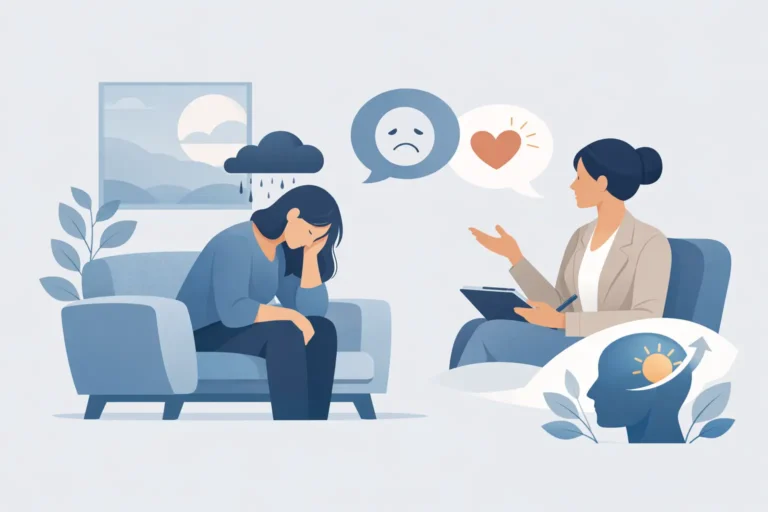
Therapy does not treat menopause as a problem you need to think your way out of. It offers a confidential space to understand what this transition is stirring up for you and to find steadier ways forward.
For some people, the focus is practical: managing anxious thoughts, setting boundaries at work, discussing needs with a partner or rebuilding routines after poor sleep. For others, menopause opens deeper questions about self-worth, changing roles, intimacy, grief or the pressure to keep coping. Both deserve careful attention.
A relational, trauma-informed approach recognises that present feelings are often shaped by earlier experiences of care, criticism, loss or having to put other people first. Through therapy, you can begin to notice familiar patterns without blaming yourself for them. Approaches such as Transactional Analysis and attachment-informed therapy can help make sense of the inner voices that become louder under stress, including the harsh or demanding ones.
At Sue Moir Psychotherapy, sessions offer a private, collaborative space to speak openly about menopause mood changes and the wider realities of your life. Support is available in person in Stockport and securely online across the UK, with an initial consultation to consider what would feel most helpful.
Give yourself permission to take this seriously
You do not need to wait until you are at breaking point to ask for help. Feeling tearful, angry, disconnected or anxious during menopause does not mean you are weak, difficult or failing at life. It may mean that your mind and body have been carrying too much for too long.
With the right medical guidance, emotional support and room to understand your own experience, this period can become more than something to endure. It can be a time to practise listening to yourself with greater honesty, care and confidence.